 On eBay Now...
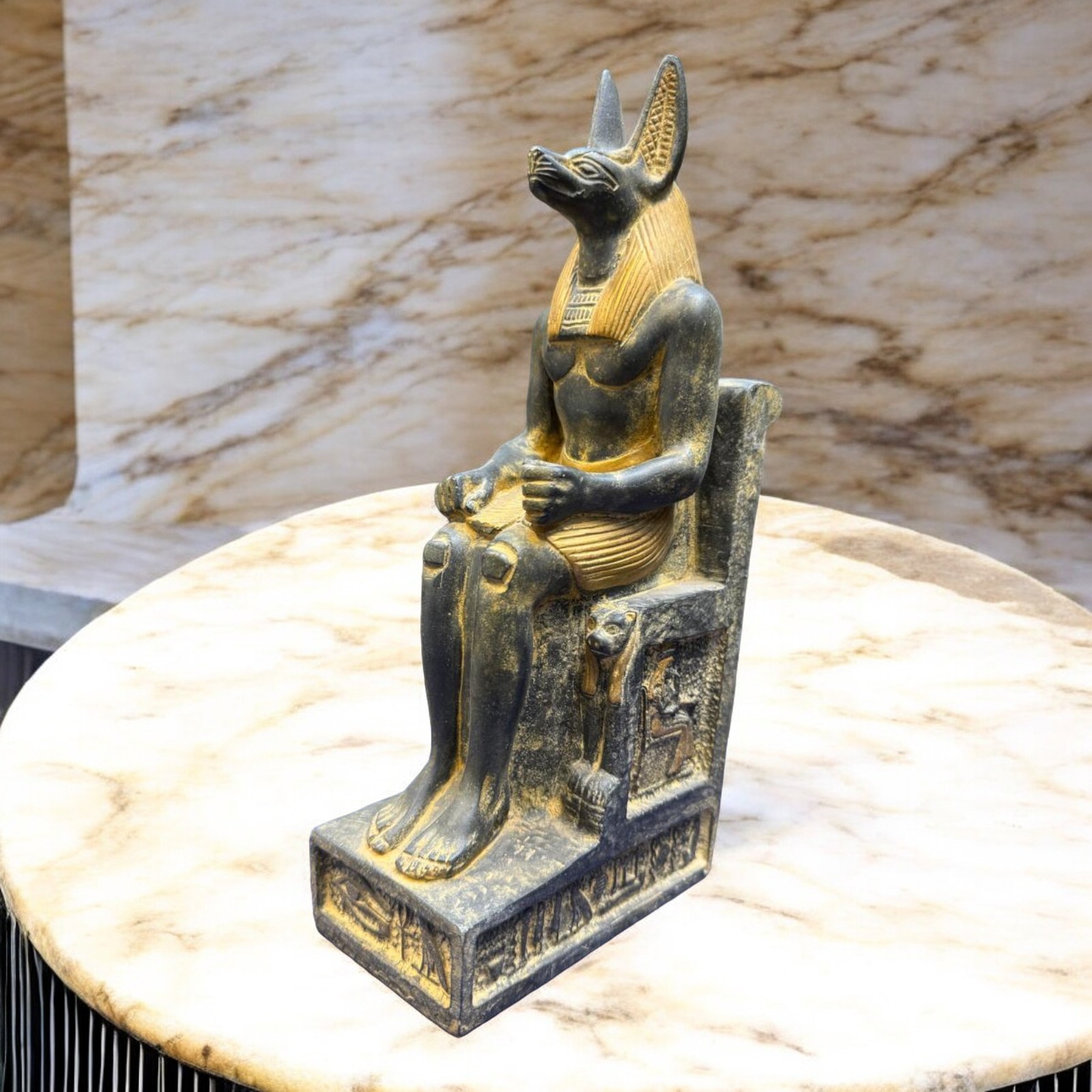
Unique Egyptian Anubis God of Mummification Statue Antique Rare BC For Sale
When you click on links to various merchants on this site and make a purchase, this can result in this site earning a commission. Affiliate programs and affiliations include, but are not limited to, the eBay Partner Network.

Unique Egyptian Anubis God of Mummification Statue Antique Rare BC:
$175.00
Unique Egyptian Anubis God of Mummification Statue Antique Rare BCDescriptionAnubis is one of the best-known deities of ancient Egypt, closely associated with death, the afterlife, mummification, and the protection of the dead. Below is a clear, concise account of his origins, appearance, roles, myths, and how he was worshiped.
Origins and identity
Name and appearance: The Greek name “Anubis” comes from the Egyptian Inpw (often vocalized as Anpu). He is usually shown as a man with the black head of a jackal, or sometimes as a full black jackal or dog. The black color symbolized both the color of embalmed flesh and fertile Nile silt, linking him to death and rebirth.Early role: In the earliest periods of Egyptian religion (Predynastic and Old Kingdom), jackals and dogs were commonly seen around burial sites, and Anubis emerged as a protector of graves and guide of the dead. He was one of the earliest funerary gods, his cult predating some better-known gods like Osiris in funerary prominence.Primary roles and functions
Protector of the dead and graves: Anubis guarded tombs and cemeteries, preventing desecration and guiding the deceased safely into the afterlife.God of embalming and mummification: Priests who prepared bodies for burial often wore jackal masks, associating their rites with Anubis. He was believed to oversee the embalming process that preserved bodies for rebirth.Guide and psychopomp: Anubis led souls into the afterlife and escorted them to the hall of judgment.The Weighing of the Heart: One of his most iconic roles is presiding over—or assisting with—the “Weighing of the Heart” ceremony in the Duat (the Egyptian underworld). In this scene, the deceased’s heart (the seat of conscience and memory) is placed on a scale and weighed against the feather of Maat (truth, cosmic order). If the heart balanced with the feather, the deceased was judged worthy of continuing into the afterlife; if not, a monstrous devourer (often Ammit) would consume the heart, ending the person’s existence. In many versions of the scene Anubis adjusts the scales or supervises the process; sometimes Osiris takes the final judgment role.Protector of ritual and sacred knowledge: As guardian of rites, Anubis was connected to sacred funerary texts, spells, and the correct performance of rituals necessary for rebirth.Myths and relationships
Parentage and family: Different myths give different parentage. In some traditions Anubis is the son of Ra (or of Ra’s eye) and Hesat or Nephthys. More commonly in later myths he is described as the son of Nephthys and Osiris—or of Nephthys and Set—depending on the tradition. The stories can be contradictory because Egyptian religion was regionally varied and evolved over millennia.Role in Osiris cycle: In the important myth of Osiris, when Osiris is murdered by his brother Set and dismembered, it is sometimes Anubis who helps Isis collect and reassemble Osiris’s body and prepares him for burial (or embalming). This links Anubis directly to the resurrection of Osiris, which became a model for human rebirth in the afterlife.Relationship with Osiris: Over time, especially by the Middle and New Kingdoms, Anubis’s role was partly absorbed into or associated with Osiris, who became the principal ruler of the afterlife. Anubis remained the embalmer and guardian but the final sovereign judge was often Osiris.Cult, priests, and worship
Centers of worship: Major cult centers included Cynopolis (“city of the dog”) in Upper Egypt and other necropolis towns near major burial grounds. Shrines and mortuary chapels often included images of Anubis.Priests and rituals: Embalming priests sometimes wore jackal masks representing Anubis’s presence during mummification. Funerary papyri and tomb paintings frequently show Anubis performing ritual roles.Amulets and symbols: Small amulets in the form of a recumbent jackal or jackal-headed figure were placed with the dead for protection. Statues and reliefs also depict him guiding or guarding the deceased.Continuity and adaptation: Even as religion centralized and Osiris’s role grew, Anubis remained a central funerary figure. His image and amulets were common throughout Egyptian history.Iconography and symbolism
Black jackal head: Symbolic of fertility and the color of mummified flesh—linking death with renewal.Scales and the feather of Maat: Key attributes in scenes of judgment.Flail and ankh: Sometimes shown holding symbols of power and life.Attire: Often depicted wearing a short kilt, as many Egyptian gods appear, sometimes with gold jewelry or a sash.Size : Height : 26 CM.
Our Guarantee 👌That the Item Will Delivered to You As Shown in Pictures Therefore we recommend that you see the picture well and then take your decision and take your responsibility.
Shipment ✈️ :DHL Fast Shipping 4-12 Days with track number - We Offer Combine Shipping 📦
Returns : 🔁I check myself each product and sell only the best quality products. In any case, if you are not satisfied with the product, first, please contact me and I will do everything to your 💯 satisfaction.